As we find ourselves nearing the end of #Tryanuary, we thought we’d publish one or two short &sweet blogs, to showcase lovely pubs in the Mid-Chilterns.
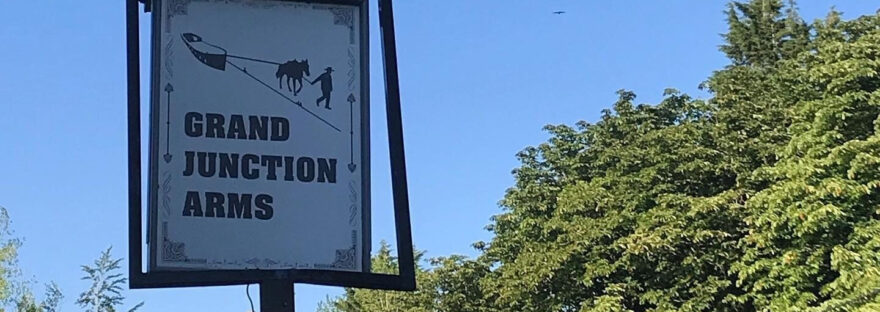
“Sat on the banks of the Grand Union Canal, The Grand Junction Arms is a traditional pub located in the hamlet of Bulbourne on the edge of the market town of Tring.”
Recently redeveloped by the award-winning Oakman Inns, this canal side pub boasts a clean, spacious and modern interior, with tasteful local artwork displayed for sale. Extensive home-made menus serve all tastes with daily specials. Monday night is steak night and Sunday is curry and quiz night, with music sessions hosted on the first Tuesday of each month.
A large family-friendly garden sits beside the canal with a wild flower orchard. A downstairs bar serves the garden in peak times, most notably the amazing bank holiday music festivals.
Local ale flows aplenty at this lovely home-counties pub, a pub that offers amazing food, events and so much more. Here’s raising a glass to a day out the Grand Junction, as soon as is possible!
Burns Night is a celebration of the life and work of Robert Burns, Scotland’s most revered poet. For this year’s festivities, we’re going to guide you through some of our favourite Scottish beer styles and how they came to be. Let’s start at the beginning..
Brewing is thought to have taken place in Scotland for at least 5000 years, drawing a large influence from Pictish and Northern European tribes, who practiced farmhouse brewing techniques with foraged ingredients.
One style of brew believed to have been mastered by the Picts was Heather Ale. As it sounds, this quintessential Scottish style has been brewed for centuries with the flowering tips of purple heather plants. Heather is just one foragable that hunter-gatherers would have used in place of hops, which are a relatively modern adjunct in British brewing. Instead of hops (which were not widely cultivated in the UK until the fifteenth century), many fruits, spices and herbs were infused in British ale – to balance out the sweet, caramel flavours of the malted brew.
Heather Ale was brewed with other adjuncts, such as bog myrtle, which complimented the drink, the main ingredient however was heather. The unique fragrance imparted by the heather proved a hit and historic recipes for the brew have been passed through Scottish families ever since. Today, heather ale is considered to be one of Britain’s most ancient beer styles.
Although hops have now displaced other adjuncts in the brew due to their impressive antibacterial properties (keeping beer fresher for longer), the flame for Heather Ale is kept alight thanks to the dedicated work of a few Scottish brewers.
Williams Brothers Brewery is the chief guardian of the style, producing its’ Fraoch Ale (Leann Fraoch being Gaelic for ‘Heather Ale’) for commercial consumption since 1992. Williams Bros use an old family recipe that has been passed down ten generations or more.
You’ll be pleased to know that, in life’s cyclical fashion, craft breweries are adopting ancient techniques and recipes to bring vibrancy to their portfolios. Fresh, delicious interpretations of Heather Ale are now brewed the world over!
As can be observed, the Scots have never let a lack of hop-growing regions affect a quality brew. Scottish barley crops are celebrated worldwide for their pedigree, it is for this reason that many a Scottish brewer has pivoted to producing malt-forward beers. These robust national styles are rich in body with an amazing depth of flavour – truly luscious!
One example of an amazing, malt-forward Scottish style is the ‘Wee Heavy’. Wee Heavy is named as such because it was traditionally packaged in smaller bottles, more suitable for the enjoyment of a strong beer. As the strongest of a brewer’s batch (partigyle), Wee Heavy can range anywhere from 7% to 11% or more!
To ‘partigyle’ is the practice of brewing one large stock of wort (brewing terminology for unfermented beer), to be split down in to three or four seperate ales, the strongest receiving the most fermentable portion of wort, the weakest receiving the least.
As the first runnings of the mash (the process in which malted barley is mixed with hot brewing water), the first brew in a partigyle would contain the most fermentable sugars and would therefore finish at a strength in the ‘Wee Heavy’ range. Wee Heavy was a premium product enjoying a long boil in the kettle, caramelising the beer to give it a sweet, slick mouthfeel.
As beer is taxed on ABV, the Wee Heavy regularly featured as the most expensive beer on the bar. In a world of ’60’, ’70’ or ’80 shilling’ beers (denoting the duty invoiced to the brewer per cask), Wee Heavy would often sit in the higher 90 shilling bracket, making it the most costly for the brewer to produce.
As one of the final runnings in a partigyle brew, the 40, 50 or 60 shilling ales would have been the weakest (and cheapest) on the bar, meaning it was affordable and sessionable for any drinker. Due to the incredible consumption of these ales, the shilling system of naming beers has now outlived the denomination of currency itself!
With Shilling Ale, Heather Ale and Wee Heavy still produced and consumed to this day, it is easy to see a Scottish influence on the wider beer world.
Despite their celebration of low-hopped beer styles, Scottish brewers became a key exporter of IPA to the British Empire. These brewers capitalised on the mineral rich waters of Edinburgh, much the same as English brewers had done in Burton-on-Trent. These waters, flush with sulphates, yielded a crisp palate in pale styles, enhancing hoppy brews such as IPA. With huge demand and gargantuan exports of India Pale Ale, the Scots had proved once again that they could master any brew they set their minds to.
Here’s to Scottish beer in all its’ embodiments, a drink legendary enough to join haggis and whisky at the perfect Burns Night table-top!
BEERS PICTURED:‘Heather Honey’ and Wee Heavy Ale from Brewdog (Ellon, Aberdeenshire), ‘Froah’ Heather Ale from William Bros. Brewing (Alloa, Clackmannanshire)
Whilst a cat, a horse and a swan would normally have you racing back to the ticket office in demand of an immediate refund, this special #Tryanuary safari is a pub crawl of Mid-Chilterns boozers that take their namesakes from the animal kingdom. Doesn’t sound so bad now, does it?
Tryanuary is a volunteer-led campaign, founded in 2015, to support beer businesses throughout the month of January (traditionally the toughest month of the year for pubs, bars and breweries).
Taking inspiration from the campaign, we’re giving you a pit-stop tour of three local pubs that will make for amazing days out when they can open their doors once more.
Whilst there are thousands of animal-inspired boozers throughout the UK, here are just three in the Mid-Chilterns that should be top of your beery bucket list:
The Old Swan, Cheddington
Set in the Buckinghamshire village of Cheddington, The Old Swan is a charming 16th-century Grade-II listed thatched freehouse that prides itself on a relaxed and friendly atmosphere.
The bar area offers an open fire and beautiful feature beams, with local ales served and dogs welcomed. Other spaces include an expansive garden for summertime imbibing and a restaurant boasting locally sourced, home-cooked food. Diners are delighted and so too are walkers, with close by routes including the Grand Union Canal and the Ridgeway Path. For those enjoying a well-kept ale or two at The Old Swan (for which there are many to choose from), Cheddington Station is just one mile away. Whether it be a grand day out or a relaxing evening cosied up to the fire, The Old Swan is a fantastic choice. Cheers to The Old Swan at Cheddington!
The Black Horse Inn, Chesham
The Black Horse Inn (Chesham Vale) is a classic country pub and four time consecutive winner of Your Chesham Magazine’s ‘Favourite Pub’ award. Along with its’ beautiful valley backdrop, this vibrant pub offers a jam-packed calendar of exciting events throughout the year. Visitors to The Black Horse Inn can enjoy acoustic evenings, special theme menus and even a thrilling movie night in the impressive barn bar.
Log fires banish cold chills in the winter and a large garden affords long, pleasant evenings in the summer. Local cask ales flow bountifully in this establishment, an establishment that welcomes dogs and children. As a one-stop shop for entertainment, lush food and exquisite ales, The Black Horse Inn really does have it all. Cheers to The Black Horse Inn at Chesham Vale.
The Black Cat, Lye Green, Chesham
The Black Cat at Lye Green (Chesham) is a cosy, inviting pub that pours many a well-kept local beer through its’ pumps. A pint of ale from the bar serves as the perfect accompaniment to an impressive array of traditional games such as dominoes and crib. Memorabilia of black cats and breweries adorn the walls and offer intrigue, with regular quiz nights to satisfy the most inquisitive of minds.
With its’ wonderful beer garden and parking a-plenty, visitors to The Black Cat may never wish to leave (good job they have food, fires and a function room).
The Black Cat welcomes both children and dogs so rally your crew for an amazing day out! Cheers to The Black Cat at Lye Green.
All change here as our whistle-stop tour of three fantastic pubs in the Mid-Chilterns draws to a close. Whichever animal they may be inspired by, we hope you can enjoy The Old Swan, The Black Horse and The Black Cat on a local ‘pub safari’ very soon.
Cheers!
*To find out more about the #Tryanaury campaign, please visit their website HERE.
Mid-Chilterns CAMRA is thrilled to be taking part in #Tryanuary 2021.
Tryanuary is a volunteer-led campaign that encourages consumers to support beer businesses in the difficult month of January.
This could be the most difficult January in decades for pubs and breweries, so we will be campaigning in their name throughout the month!
Along with a weekly cheers in our virtual boozer (@….), we will celebrate the local beer scene with blogs and social media posts, giving you experiences to look forward to in the year ahead.
Our weekly ‘Cheers!’ invites drinkers to raise a glass to Mid-Chilterns pubs and breweries, many of which remain open for takeouts. The location for our virtual ‘Cheers!’ is the Mid-Chilterns Arms – our local branch Facebook group.
Much like a physical pub, the Mid-Chilterns Arms offers a safe space for friendly conversation and a drink or two. As the best are, we’re an inclusive establishment, so no matter if beer isn’t your tipple-of-choice!
Cheers to a new year of hope, starting with #Tryanauary
*To find out more about the #Tryanaury campaign, please visit their websiteHERE.
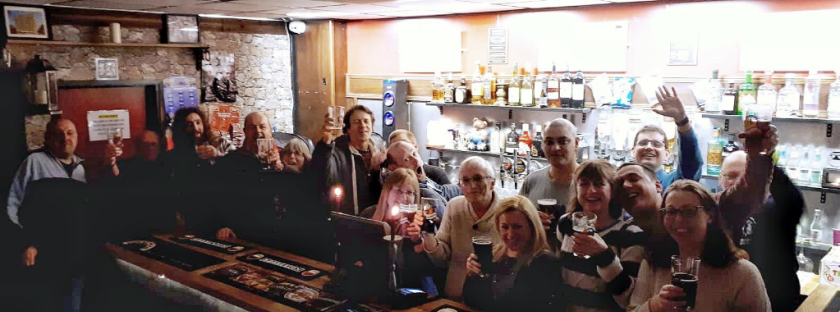
Mid-Chilterns CAMRA celebrations during #Tryanuary 2019