The Good Beer Guide is CAMRA’s seminal publication and the is the best-selling beer and pub guide, featuring 4,500 of the UK’s best pubs, including fourteen from the Mid-Chilterns branch.
We are thrilled to showcase The Green Dragon in Flaunden as one of Mid-Chilterns CAMRA’s entries into this year’s Guide.
WHATPUB SAYS:
An ancient rural pub with an historic tap room, for which time has stood still since it was reconstructed in 1838.
It reopened in 2020 following a refurbishment that won a CAMRA Pub Design Award, and features in the Campaign’s publication Britain’s Best Real Heritage Pubs. Lovely enclosed garden to the rear and roadside seating to boot!”
The Good Beer Guide is CAMRA’s seminal publication and the is the best-selling beer and pub guide, featuring 4,500 of the UK’s best pubs, including fourteen from the Mid-Chilterns branch.
We are thrilled to showcase The Bell Inn in Bovingdon as one of Mid-Chilterns CAMRA’s entries into this year’s Guide.
WHATPUB SAYS:
Sympathetically refurbished in February 2018 by the new licensees keeping all the pub’s characteristic features. Friendly local split into several areas – the bar area is on two levels with wooden beams (and together with the snug is the original area of the pub); snug with dart board and games machine; separate restaurant to the rear.
Good restaurant and bar food. 2/3 real log fires in winter. Small patio and smoking area to the side. Up to 3 guest real ales from local breweries. Small parking area to the rear.”
The Good Beer Guide is CAMRA’s seminal publication and the is the best-selling beer and pub guide, featuring 4,500 of the UK’s best pubs, including fourteen from the Mid-Chilterns branch.
We are thrilled to showcase The George Inn in Berkhamsted as one of Mid-Chilterns CAMRA’s entries into this year’s Guide.
WHATPUB SAYS:
Well looked after outside, and inside there is a central island bar within a single room format.
The character changes style as the room turns around the bar. Window bench seating in the front windows and high stool tables, moving into a lounge type of feel with lower table and chair format and then coffee shop-style low table and sofa behind the bar island. All very well presented.
Covered courtyard area also. Décor consists of wallpaper, framed prints and newspapers, plus mirrors.”
The Good Beer Guide is CAMRA’s seminal publication and the is the best-selling beer and pub guide, featuring 4,500 of the UK’s best pubs, including fourteen from the Mid-Chilterns branch.
We are thrilled to showcase The Rising Sun in Berkhamsted as one of Mid-Chilterns CAMRA’s entries into this year’s Guide.
WHATPUB SAYS:
The Rising Sun in Berkhamsted is a traditional pub which adopted the environs of lock 55 in 2013.
The ever changing guest beers and multiple real ciders/perries are accompanied by hundreds of gins, cigars, and exotic spirits and liqueurs.
Three inside areas, canal-side seating and a sunken patio make this a pub for any time of the year.
Look out for the many events that take place throughout the year including beer festivals, quizzes, and cheese club.”
As the first in a series of blogs exploring cask ale hotspots in the Mid-Chilterns area, we’re taking to the West-Hertfordshire market town of Tring.
This week’s Ale Trail starts in Wigginton, on the outskirts of Tring. Our trail then meanders onto Tring High Street, before emerging out of the town and on to its other outskirt settlements, Bulbourne and Marsworth.
Each pub features a description from CAMRA’s online national database – WhatPub. WhatPub allows members to view pub information and score visits. WhatPub scores directly influence branch ‘Pub of the Year’ awards as well as entries into the Good Beer Guide, so be sure to score your favourite pubs today!
On with the trail..
1. The Greyhound, Wigginton
The Greyhound in Wigginton can be found on Chesham Road in the Tring-outskirts village of Wigginton (HP23 6EH).
WhatPub says:
A traditional family run village inn situated in the sleepy village of Wiggington. Offers a warm and friendly welcome to all visitors. Four beers, two usually from local breweries. Freshly prepared top quality food is served daily. Groups and families are always welcome in the bar, restaurant and beer garden. Three large en suite rooms are available.”
2. The Robin Hood
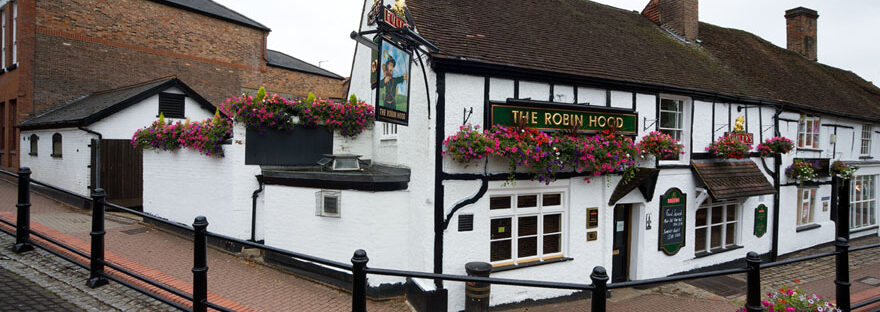
The Robin Hood is Fuller’s pub that is located at 1 Brook Street (HP23 5ED).
WhatPub says:
A classic community pub situated in the centre of the pretty and ancient market town of Tring. Your hosts, Terry & Stuart, will welcome you into this busy pub with a warming stove and cosy feel. A Fuller’s pub with six hand-pumps carrying one regular guest ale from within the classic Fuller’s range. Great food is available and on Sunday evenings you can now enjoy Tip Khao Thai food an exciting difference to the classic pub menu with an outdoor patio area for better weather. Charity functions are a regular event and this pub has been responsible for raising a good deal of funds for local charities over time.”
3. The Bell
The Bell is a recently reopened pub on the town’s High Street (HP23 5AA), now owned by Farr Brew.
WhatPub says:
17th Century coaching inn with original beams. In addition to the main bar there is a back bar with a pool table and a large courtyard garden. Home cooked food.”
4. The Castle Inn
The Castle Inn is a recently reopened establishment situated on Park Road (HP23 6BN).
WhatPub says:
Situated on the southern fringe of Tring, 200 yards from the Rothschild Zoological museum, this is a friendly Victorian corner pub. It is a one room genuine drinkers’ pub with three hand-pumps serving well kept local ales (the guest is invariably a Tring beer). Comfortable, upholstered bench seating, TVs for sports viewing and two darts teams make this a thriving local. There is an attractive rear open courtyard with some covered seating; no food is served.”
5. The King’s Arms
The King’s Arms find itself in the heart of the ‘Tring Triangle’ area of the town, located on King Street (HP23 6BE).
WhatPub says:
1830s back-street local, popular with all age groups. Painted externally in striking fuchsia pink it was run by the same family for 31 years until it was taken over by the Muirhead family in 2014. It offers a changing range of five real ales and one cider. Two real fires are welcoming in winter, and outside is a secluded heated patio with canopies. Home-cooked food is based on an imaginative international menu. Children are welcome at all times.”
6. The Anchor
Just a four minute walk from our previous stop is The Anchor, located at 73 Western Road (HP23 4BH).
WhatPub says:
Situated ten minutes walk west of the town centre this welcoming pub, refurbished in 2012, has a spacious bar with tall tables in the two front bay windows, and more conventional seating at the rear. There are pictures of local scenes and unusually, wine crate sides on one wall, TVs for sports viewing, and the bar sides are faced with reclaimed door and floor timbers. Fresh filled rolls with local bread from the bakery opposite are available on the bar. Burgers etc. are available.”
7. The Grand Junction Arms, Bulbourne
The Grand Junction Arms is an Oakmann Inn’s pub located in the outer-Tring hamlet of Bulbourne (HP23 5QE).
WhatPub says:
This canal side pub boasts a clean, spacious and modern interior with local artwork displayed for sale. Extensive home-made menus serve all tastes with daily specials and Monday night is steak night. Music sessions are hosted on the first Tuesday of each month and Sunday night is curry and quiz night. A large family friendly garden sits beside the canal with a wild flower orchard. During busy periods a downstairs bar serves the garden, notably during bank holiday music festivals.”
8. The Angler’s Retreat (Marsworth)
The Angler’s Retreat can be found at Startops End (HP23 4LJ), in the Buckinghamshire village of Marsworth, near Tring.
WhatPub says:
A good base to use when investigating the Tring Reservoirs. A fish theme is in evidence in this one bar local where rooms can be had. The 4 beers area mixture of local and small nationals. The garden with an aviary and even a parrot in the bar guides you to a very rural experience with good cheap food to complete your stay. Conservatory and garden make it seem even bigger. Tring Brewery is the LocAle beer.”
9. The Red Lion, Marsworth
One final pub and another that calls home to the village of Marsworth. Found at 90 Vicarage Road (HP23 4LU).
WhatPub says:
Genuine 17th-century village pub close to the Grand Union Canal. A central bar serves three areas: an upstairs lounge, a small snug to the left of the entrance, and a public bar with an open coal-burning fire. A games area hosts darts. Five or more well-kept beers are served on hand pump and the kitchen serves generous portions of home-cooked food. There is a beautiful garden to the rear.”
TIME AT THE BAR
That marks the end of our nine-pub ale trail, featuring local cask beers, rural outposts, foodie hotspots and more.
We hope that you will join us on the next ‘Ale Trail’, to be set in Hemel Hempstead. Come wander with us through the branch’s largest town, home to Mid-Chilterns CAMRA’s very own Hemel Old Town Beer Festival.
For now, we’ll raise a glass – to the wonderful pubs of Tring!
CHEERS
*Disclaimer: As with all entries in this series, drinkers are advised to research transport options and pub opening times in advance. Trails are simply ‘spotlights’ – additional local ale outlets may be omitted. Visiting every trail pub in a single day may not be practical/achievable.
In this week’s focus blog we’re taking a deep-dive into the world of perry.
Perry is a fermented, alcoholic drink made from pear juice, usually from eponymously named perry pear varieties, though culinary pears such as Comice and Conference are used also.
Perry is generally straw-gold in colour, big on fruity flavours ranging from bone-dry to sweet and commonly found in the United Kingdom and France (with smaller markets in Austria, Germany and Switzerland).
Pears are grown in orchards. Pears may be classed as cooking, eating or perry varieties.
On the palate, perry is widely compared to both cider and sparkling white wine. Whilst straddling this line is no mean feat, perry is often over-shadowed by cider at the bar as both are grouped for their similarities.
In the face of this relative obscurity (and myriad production hardships), perry is championed by avid drinkers and makers alike, now amplified as a single voice through CAMRA’s first ever ‘Perry Month’ – happening this October.
Perry Month will celebrate the unique flavours and aromas of a drink that boasts a storied history, one featuring pagan gods, Napoleon Bonaparte and UK television firsts.
So, you may ask, what exactly is perry?
‘PERRY, TASTES LIKE CIDER RIGHT’
Although perry is a drink in its own right, it can be very tricky to produce, meaning it is almost always made as an ancillary product by cider-makers.
Cider-makers capitalise on their expertise in orchard-fruit pressing and fermenting, crafting a drink that is highly comparable to their mainstay apple beverages in both process and palate.
When talking of palate, perry can mirror cider’s tart fruitiness and then some. Smacks of pear dominate, with luscious high notes of tropical fruit and gooseberry. Sherbet, white grape, apricot and honeysuckle are not uncommon tasting notes. Floral aromas suggest fragrances of elderflower and grass.
Like cider, perry balances a structure of tannins, sugars and acids. The presence of citric acid in perry (which is not found in cider) boosts the drink’s fragrance, evocating flavours not unlike white wine. Playing into perry’s wine-like qualities is the suggestion that the drink was favourite of no other than Napoleon Bonaparte, allegedly referring to it as ‘the English Champagne’.
Considering the shared similarities of perry and cider, plus perry’s additional layer of citric acid, perry is surprisingly less mainstream than its apple-based buddy.
So why is this – why does perry remain so niche?
PERRY: A LABOR OF LOVE
Historically, cider and perry were both farm-made drinks, crafted alongside each other to similar strengths of alcohol. Through this shared lineage, both drinks hold a ‘quintessentially British’ image in the national conscious, conjuring thoughts of rolling greenscapes and flowing flagons passed over ancient farm gates.
These wistful ideals, however, form a stark contrast to the actualities of professional perry-making, a task more risk-fraught than cider-making, once described by Tom Oliver of Oliver’s Cider and Perry as “more dangerous than deep sea-diving.. more dangerous than filming sharks”.
The hardships of perry production start in the orchard, as fickle-to-grow pear trees encompass large areas of orchard real estate, taking a long time to reach full maturity (that is, if they grow fully). At fruiting, pears need to be handpicked in a water tight window of time, too early and the fruit will be unripe, too late and pears will fall to the floor, bruising and mushing their flesh.
Perry trees take a long time to grow and some that live today date back three hundred years. ‘Plant an apple tree for your children, plant a pear tree for your grandchildren.’ – perry-making turn of phrase
Once picked, pears are pressed to extract their juices. Select pears can be very hard, meaning the fruit cannot be processed through the same industrial machinery as cider.
Juices extracted and it is time for fermentation. Perry is known for its light body and delicate composition, this fine balance makes the drink susceptible to undesirable bacteria, leading to common infections such as ‘mouse’ which spoils entire batches without discrimination. (Mouse is an off-flavour that occurs in infected perrys – fausty in the mouth and displeasingly funky in taste, like a mouse cage, hence the name).
Post-fermentation and extra sweetness is provided by sorbitol, an unfermentable sugar that occurs naturally in perry pears (though not in cider apples, another difference in the make-up of perry and cider respectively). Whilst sorbitol brings a welcome sweetness from its unfermented sugars, it may also induce a laxative effect when consumed in large quantities. Quite undesirable indeed!
At bottling the drink’s delicate form works against it once more, as loose sediment clumps on occasion to form a visible ‘brain’. These ‘brains’, sometimes marketed as ‘perry diamonds’, are harmless-to-consume bodies of matter that can compromise the aesthetic of an otherwise crystal-clear perry. In some cases, a disconcerting ‘snowglobe’ effect can take control. Whilst ‘brains’ and ‘snowglobes’ are not detrimental to the balance of a quality perry, they are generally undesirable for the consumer and act as yet another point of caution for budding producers.
If, and only if a perry overcomes these obsticles, the drink can be enjoyed en masse from bottles, kegs, cans or polypins at home or in a pub that is willing to stock it.
All of the above may explain perry’s modest commercial output, and sounds like a case for why not to make it, so how has the drink survived to this day?
A BREIF HISTORY OF PERRY
To understand perry’s unwaivering nature is to understand the heritage of its mysterious fruit, the pear.
Our story begins at the end of the ice age, with a new warm period ushering in a flourishing of wild pears across Europe. In Britain specifically, orcharding skills arrived with conquerors from Rome, spurning the growth of common pears across the isles.
Domestic orcharding knowledge was lost when the Roman Empire fell back, though pears remained fruitful as chance seedlings sprouted across the UK. Some years later a medieval warm period arrived, facilitating the keeping of vineyards. As the climate warmed, so too did thirsts for fruit-based tipples.
The mediaeval warm period was proceeded by a little ice age that summoned cooler temperatures. This climatic shift favoured orchard growth over that of vineyards, allowing cider and perry to rise atop the fruit-booze podium. In regard to a renewal in British orcharding knowledge, it’s thought that the lost skills from Roman days had made their way back from the fruitful Eastern world via Northern Africa, through Spain and France. All factors now in place, the stage was set for perry and cider to rule Britannia.
Single variety Thorn perry from Ross on Wye Cider & Perry Company (Herefordshire). Source : CAMRA social media channels | Credit : Helen Anne Smith
As British orchards became widespread with culinary and cooking pears, select varieties began to be bred for the purpose of drinking. It is believed that the growers of the May Hill area in Gloucestershire were those responsible for cracking perry pear cultivation, igniting a trade for commercial perry production. Perry’s commercial reputation reached fever pitch as England warred with France, celebrated by domestic aristocracy as the perfect replacement for fine wine (wine suffered from geopolitical blockading at the time).
Taking a few steps forward in time and industrialisation had transformed Britain beyond imagination. Almost inevitably, the hard-to-work-with pear and its orchards were side-lined in favour of burgeoning beer and cider markets. The death-knell for perry was sounded.
A few strides forward in time again and perry was ready to surprise all with a significant comeback in national favour. The commercial releases of Babycham and Lambrini (yes, both are perrys!) were gargantuan in the latter half of the 1900s, the former launching the UK’s first ever televised alcohol advertisment. Regrettably, the ever-growing march of alcopops and continental lager put an end to perry’s fifteen minutes of fame, consigning the drink once more to novel memories of a sparkling wine substitute.
More recently, a surge in premium ciders served over ice, such as Bulmers, Magners and Gaymers has brought offerings of ‘pear cider’ to supermarket shelves and pub bottle fridges across the country.
Today, pear cider is a contentious term as industry voices worry authentic perry could be banded in with apple-based cider drinks that have simply been blended with the inclusion of pears or pear flavouring, muddying perceptions at the bar front. These conversations have brought pear drinks back into parlance, offering artisanal makers an opportunity to educate and delight consumers with authentic examples of delicious, drinkable perry.
CONTEMPORARY MAKERS IN MODERN TIMES
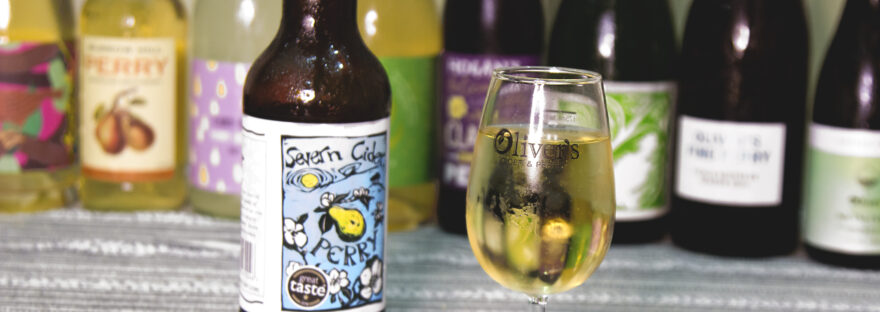
Today’s perry drinker can enjoy an array of treats from specialist bottleshops, with well stocked shelves featuring both home-grown producers and celebrated makers from the continent. In our fervent research we have been lucky enough to sample bottles from Oliver’s (Herefordshire), Gregg’s Pit (Herefordshire), Severn (Gloucestershire), Little Pomona (Herefordshire) and Burrow Hill (Somerset), all of which were fantastic . (For more extensive bottle notes, please read the ‘what we’ve been drinking’ section below.)
As detailed above, modern perrry-makers ground themselves in the drink’s historic holdout territories. Gloucestershire (the county home of May Hill) and its close neighbours of Herefordshire, Worcestershire and Monmouthshire are proudly touted as ‘cider and perry country’, with May Hill itself taking undisputed claim to ‘perry’s cultural heartland’.
West-Country areas such as Bristol and Somerset join with Normandy in France to champion traditional perry-making along the coastal belts. These coastal areas prospered during the medieval warm-period and continue to be a slice of verdant orcharding territory, sandwiched between the grain-based beery North Europe and the grape-based wine cultures of Europe to the South.
Modern perry is a rich tapestry with a breadth of styles ranging from bone-dry to super sweet, bolstered by curiosities such as ice-perry, perry brandy and Eau de Vie de Poire. Common varieties of pear used in perry’s modern style spectrum include Butt, Thorn, Stinking Bishop, Blackney Red, Hendre Huffcap, Coppy, Rock, Gin, Oldfield and Plant de Blanc (FR). Be sure to try as many as you can, it is a fun task indeed.
The future of perry is bright with a new wave of evangelists and a dedicated CAMRA campaign month to boot – we’ll raise a glass to that!
ONE FOR THE ROAD – WHY OCTOBER?
CAMRA celebrates Perry and Cider all year-round but most especially in May and October – two months that are intrinsically linked to the production of each drink.
October is a prominent month in the perry calendar as it is commonly when pears are harvested from the orchards that they have been grown in, ready for pressing into juice and in turn, fermentation.
In May, new pears will fruit as the previous year’s perry rounds out to appropriate maturation. Matured perry is soon bottled and ready to drink over the long, hot days to come.
The Campaign for Real Ale has a dedicated ‘APPLE’ committee, campaigning in the name of real cider and perry all year round. Click the APPLE committee logo above to learn more.
Oliver’s X Cloudwater – Ask The Fields – Medium dry, 6.3%, sparkling, red wine barrel-aged + dry-hopped with NZ Cascade and Nelson Sauvin : sold out online
BONUS CONTENT: ALTERNATIVE HISTORY
If you’d rather prescribe to a pagan explanation of perry’s origins, then please read as follows:
One ancient pagan legend tells of a young godling rushing to the summit of May Hill in Gloucestershire. Joining the gods atop May Hill, the godling brandishes a perry pear and proclaims it to be the “true elixir of life”. Without hesitation a god grabs the fruit scoffs it whole, quickly however, the god’s face turns to disgust, before pear flesh and pips are spat out with gusto. Nervously, the godling informs his elders that they weren’t supposed to eat the fruit, but to press it instead, and enjoy its drink.
Alas, the godlings instructions were too late as perry pear pips had been expelled in every direction of May Hill, falling to the earth and nestling in the ground. Almost immediately, majestic perry pear trees erupted from the earth, heralding the land in sight of May Hill as ‘the home of good perry-makers’. The rest, in accordance with pagan folklore, is history!
Mid-Chilterns CAMRA are thrilled to announce that CAMRA’s ‘Good Beer Guide 2024’ is out now and features fourteen of the branch’s greatest pubs.
HERTFORDSHIRE ENTRIES
• The George Inn, Berkhamsted • The Rising Sun, Berkhamsted • The Bell Inn, Bovingdon • The Green Dragon, Flaunden • The Full House, Hemel Hempstead • Monks Inn, Hemel Hempstead • The Saracens Head, Kings Langley • The Kings Arms, Tring
BUCKINGHAMSHIRE ENTRIES
• Boot and Slipper, Amersham • The Blue Ball, Asheridge • The Queen’s Head, Chesham • Trekkers, Chesham • The George Ale House, Great Missenden • The Crown Inn, Little Missenden
The Good Beer Guide is CAMRA’s seminal publication featuring 4,500 of the UK’s best real-ale pubs, in rural and urban areas.
Now in its’ 51st edition, CAMRA’s publication is the best-selling beer and pub guide with a foreword from Iron Maiden frontman Bruce Dickinson alongside consumer features, industry analysis and a comprehensive guide to hundreds of UK breweries too!
The Good Beer Guide’s 2024 foreword is from Iron Maiden frontman Bruce Dickinson
As always, our nominees were curated from the highest scoring establishments on WhatPub, CAMRA’s public scoring portal which allows all members to put their local forward for awards and commendations.
Congratulations once again to all of our entries – here’s to another fantastic edition of CAMRA’s Good Beer Guide!
In this week’s focus blog we’re celebrating the British hop harvest, which has just begun and will likely continue until early-October. We will also be taking a look at one particularly revered product of hop harvest season: green hop beer.
Green hopped beer, sometimes known as ‘fresh hopped’ or ‘wet hopped’ beer, is beer that has been brewed using hops that are fresh from harvest. Green hops are admired for their unique flavours and oily mouth feel, a profile that can only be enjoyed in the immediate window of time that proceeds the UK hop harvest.
HARVEST TIME
The British hop harvest occurs chiefly in September, a slog of ardent labour that can easily spill into early October, picking hops at their prime and drying them out quickly for storage. It is this last step, the drying, that the hop grower forgoes as they offer fresh ‘green’ bines to brewers.
Once picked, the unique ‘green’ properties of hops can fade quick, accelerated by conventional interventions such as pelletisation – for this reason, green hops are left unpelletised or ‘whole leaf’. The opposite of green hops are conventional hops, which are dried, pelletised and packaged in ways that enable the flowers to be fragrant for up to a year.
Green or not, hops are the in-vogue agent when talking of modern beer, and it is this vibrant green plant that tops the bill when drinkers are asked to name just one ingredient used in brewing. So what exactly are hops, where did they come from and why do we use them?
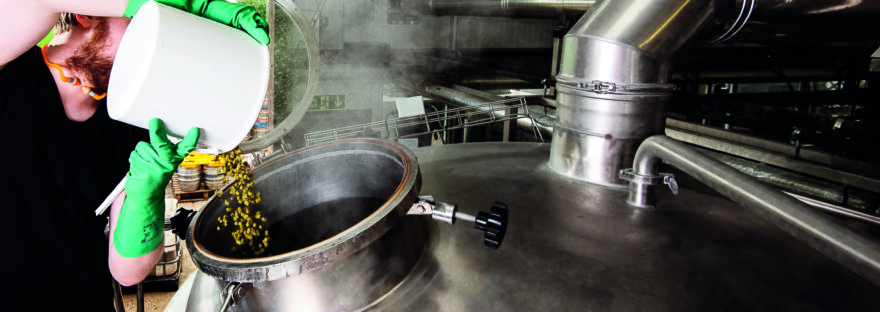
Tring Brewery brewer, Sam, adding hops during the boiling stage.
AN INTRODUCTION TO HOPS
Hops are flowers that grow in bines, a member of the hemp family and a cousin species to marijuana. Hops were first used in brewing for their flavouring qualities, used interchangeably with other foragable adjuncts such as bog myrtle, yarrow, honey, spices and herbs. Thought to have been first imported for brewing around 1400, hops were introduced to the UK by Flemish traders and were domesticated soon thereafter.
Initially, new-style brews with hops were known as beer and those without hops were sold as ale. As can be observed, hops are the most recent addition to conventional brewing recipes and therefore are the only ingredient (out of hops, barley, yeast and water) that are not necessary in the production of beer (beer in its’ most basic acceptance is an alcohol beverage fermented from grain – inherently requiring cereal, water and yeast to ferment).
So why did hops displace other foragables as the primary adjunct in brewing?
Close up of a hop cone, as it would occur naturally on the bine.
The reason why hops have been so widely adopted into brewing recipes is that they are anti-microbial in nature. With the discovery of hop’s magical keeping qualities, beers were given a new lease of life, taking shelf-life from less than one week to between four to six weeks. This discovery was transformative in the brewing industry, turning a domestic chore (brewing a batch of beer was much like cooking a batch of broth) into a commercial industry, which could store commodity product for weeks – to be despatched to outlets (such as public houses) where product could be kept for weeks further.
Keeping properties and flavour/aroma contributions are just two of the four qualities that brewers celebrate in hops, the others being bittering (through isomerisation of Alpha Acids) and foam retention (the frothy head and lacing that can be seen in a glass of beer).
Hops are variety dependant, as such they are often seen as ‘the grapes of the brewing world’ with each breed exhibiting a distinct expression of where it is grown, the richness of the soil, the topography of the land, levels of sunlight and many other variable factors. Hundreds of varieties are offered commercially and each is different in both flavour and aroma. With a world of flavours awaiting, you might wonder what our very own British-grown hops have to offer..
BRITISH HOPS
British hops are known for their respectable bittering yield and grassy, herbal flavours. In regard to modern brewing, UK hops are often second choice for contemporary producers of aroma-forward pale beers, opting instead for the tropical fruit-ladened varieties of the United States, or the delicate white grape notes and bright bouquets of Australasian breeds. Though international hops are readily available for amateur and pro brewers, home-grown British hops keep a special place in the heart of many for their rich heritage and hedgerow fruit sweetness, elevating indigenous styles like stouts, porters, mild and best bitters.
In an attempt to attract contemporary brewers, UK hop growers are championing new varieties that have been bred with aroma in mind. Some new varieties such as Olicana, Jester and Harlequin have made a big splash with beer writers and discerning critics alike. In the most part, new British varieties have The British Hop Association to thank for their existence. The British Hop Association is formed of many commercial growers and offers vital research programmes that can be the proving ground for rising stars in the UK hop scene.
Logo for the British Hop Association, formed in 1996.
Whole leaf hops being added to the kettle for boiling.
Regardless of their bittering/flavouring/foaming/stabilising qualities, millions of kilos of British hops are harvested each year, gracing the vessels of breweries, and eventually, the glasses of thankful beer drinkers. Of these countless bushels, a select few are reserved as green hops, to be brewed with in the hours that follow the harvest.
Conforming to nature’s ever present trade-off between fresh flavour and shelf-stability, vibrant green hop flavours must be captured immediately, with most producers aiming to brew within 24hrs of harvest. With no human intervention (drying/packing/storage) to increase shelf-life, the hops’ piquant qualities dissipate with each passing moment.
So what qualities can we expect of British green hops, and how do they taste in beer?
UNIQUE FLAVOUR
Generally speaking, green hops contribute a slick mouth feel through their increased level of oils. In terms of flavour and aroma, this differs from one variety of hop to another, though smacks of stewed fruits, hedgerow fruits and herbaceous spice are not uncommon. Common hop varieties that are offered available as ‘green’ in Britain include national staples like Fuggles, Bramling Cross and East Kent Goldings (the latter taking their namesake from a major UK hop-growing region).
The distinct flavours and slick palate of Green Hop Ale positions the style as a mythical beast in the beer world, made more elusive by its short-lived, once-yearly drinking window.
As both a lauded and short-lived product of agricultural, Green Hop Beer is inextricably linked to its locale. These links can be seen in annual celebrations of beer, culture and brewing that are hosted in the UK’s historic hop-growing territories.
THE HOME OF HOPS
Known as the ‘Garden of England’, the county of Kent is the UK’s spiritual home of hops. Kent stretches from the outskirts of Greater London down to the shores of the South East, offering coastal conditions and broad agricultural landscapes, factors that promote a fruitful cultivation of hops.
Kent is the home of the eponymous ‘Kent Green Hop Beer Fortnight‘, which sees close to thirty brewers within the county celebrate Green Hop Ale with their own spin on the style. Style is a word that can used loosely when talking about green hop beer, which can be straw-blonde and bitter or jet-black and sickly-sweet, just so long as the ale is brewed with hops fresh from the harvest. Interpretations from Kent’s many brewers offer a healthy spectrum of tipples, affording drinkers a veritable feast of flavour throughout the fortnight. Generally the beers are marked as ‘Kent Green Hop Beer’ and can be found in local pubs, bars and micropubs.
The Kent Green Hop Fortnight is underpinned by the annual ‘Kent Green Hop Beer Festival‘, an event held in Canterbury that showcases as many examples of the style as possible under one single roof. Another staple of the harvest season in Kent is the ‘Faversham Hop Festival‘, hosted in part by Shepherd Neame, England’s oldest brewer. With brewing pedigree which dates back to 1698, Shepherd Neame have seen countless hop harvests in the local area, culminating in a special green hop brew that is launched with much fanfare to local townspeople, with ancillary entertainment such as Morris dancing, parades and folk singing. The renowned Faversham Hop Festival sees approximately 40,000 visitors each year and proudly pays homage to the area’s hop-growing heritage:
“The first hop garden recorded in Kent was at Westbere in the 1523. As four Faversham merchants exported 73 pockets of hops to London in 1599 through the Port of Faversham our town or the villages around were clearly not only growing hops but growing a substantial surplus for sale. Twenty years before Faversham was importing hops from the Low Countries. In those intervening years the sourcing of hops had changed forever.” – Faversham Hop Festival website
Though there is no PGI/PDO certification for ‘Kent Green Hop Beer’, the website which is run by the fortnight’s organising body sets out the following criteria:
“1. The beer must be brewed in Kent 2. The beer can only contain Kent-grown hops 3. The beer can only flavoured with fresh, undried hops 4. The Kent hops must be used within 12 hours of picking“
It is to be noted that the above conditions only apply ‘Kent Green Hop Beers‘ – that is, those that are earmarked and featured at the annual Kent Green Hop Beer Fortnight.
FORWARD THINKING DRINKING
Just as an ale can be a ‘green hop beer’ if not brewed in Kent (just not a ‘Kent Green Hop Beer’), it can also be a brilliant representation of the style without using legacy varieties such as East Kent Goldings, Bramling Cross or Fuggles.
A growing number of green hop beers are now being produced by forward-thinking brewers, using modern techniques with new and experimental hop varieties. Upstart varieties such as Olicana, Jester and Harlequin have played lead in offers from celebrated contemporary outfits such as Five Points, Northern Monk and Wild Beer Co. Evidently, the future is bright for this historic brewing method.
Contemporary brewers such as Wild Beer Co and Five Points have brewed green hop beers using new British varieties.
ONE FOR THE ROAD
The unique flavours, aromas, and palate provided by fresh green hops are a cause for celebration and represent a true sense of place and time (or ‘terroir‘). Green hops are part of our our national gastronomic identity, take centre-stage at events that have brought communities together for centuries and are lauded by both the oldest and newest brewers in Britain.
Here’s to a fruitful harvest, and another season of green hop brewing!
CHEERS
** BONUS FUN FACT 1:
One prominent common property of hops and marijuana is that they are both soporific, meaning they induce a state of tiredness.
As a traditional working holiday, Victorian working-class parents would take their families hop-picking, whisking their clans away from the cramped conditions of the big cities and down into the Kentish countryside. Families would receive accommodation, food and drink in exchange for what was, at the time, a tough manual task that required the work of hundreds of hands.
An arduous job, children were sent to pick the hops throughout harvest time, returning to the accommodation exhausted and covered in hop matter. As the children slept soundly from a hard day’s toil peppered with soporific residue, adults drank the night away with tankards of delicious beer. Hop picking – billed as the perfect Victorian escape!
BONUS FUN FACT 2:
Hops are rarely used outside of brewing, though they are included in recipes for sleep remedies (because of their soporific qualities) and their shoots can be substituted for asparagus in cooking.
Today we are celebrating our sister branches, the localised CAMRA groups that border the Mid-Chilterns area.
In order to introduce our neighbouring branches, it is important to understand the system of devolved groups within the Campaign for Real Ale, Europe’s biggest consumer organisation. Nationally, there are over 150,000 members of CAMRA, and each one belongs to a localised branch with a committee who oversee campaigning within a set geographic area. Each branch belongs to a region, with regional directors acting as a flow point between local committees and the national executive. There are currently around 220 branches that belong to 16 different regions including Wales, Northern Ireland & Scotland and Wessex & Channel Islands.
Mid-Chilterns CAMRA is part of the Central Southern Region. Two of our five sister branches, Aylesbury Vale & Wycombe plus Slough, Windsor & Maidenhead, can also be found in Central Southern Region. Our remaining three sister branches, South Herts, Watford & District and South Beds, all reside in the East Anglia Region.
To start, we’re highlighting the South Herts branch, which borders the Mid-Chilterns to the north. South Herts branch is famously home to CAMRA HQ, as well as the branch’s noted beer festival, St Albans Beer Festival which occurs annually in September. St Albans is one of a handful of larger areas that make up the branch, which also includes Hertford and Harpenden. The South Herts branch is home to popular brewers 3 Brewers, Farr Brew and McMullen’s. The branch magazine for South Herts CAMRA is Pints of View. The South Herts branch Pub of the Year is The Robin Hood (St Albans), we highly recommend it!
Historic Buildings plaque denoting the first branch meeting of CAMRA, at The Farrier’s Arms on Lower Dagnall Street in St Albans.
To the south-east of the Mid-Chilterns is a small border shared with the Slough, Windsor and Maidenhead branch. The Slough, Windsor & Maidenhead branch host their annual event, the Maidenhead Beer & Cider Festival, at North Maidenhead Cricket Club Sports Bar at Summerleaze Park (around July time). Winsor & Eton Brewery, Two Flints Brewery, Indie Rabble Brewing Company and Stardust Brewery can be found in the branch boundaries, and the reigning Pub of the Year is A Hoppy Place in Maidenhead. Areas covered include the obvious Slough, Windsor and Maidenhead, along with Denham, Stoke Poges, Gerrards Cross and more. The branch magazine for Slough, Windsor and Maidenhead branch is CAMRA Angle.
CAMRA Angle, branch magazine of Slough, Windsor & Maidenhead.
Nestled on the southern border of the Mid-Chilterns area is Aylesbury Vale & Wycombe branch. Aylesbury Vale & Wycombe’s branch Pub of the Year is the The Cross Keys, found in Thame. Major areas in the branch include Aylesbury, High Wycombe, Marlow, Thame, Beaconsfield and Aston Clinton. The branch’s regular publication is the Swan Supping magazine and showcases news from no less than 10 brewers within the locale. Brewers listed within the Aylesbury Vale and Wycombe area are Boobytrap Brewery, Chiltern Brewery, Feisty Beer Co, Old Luxters, Rebellion Brewery, Thame Brewery, Vale Brewery and XT Brewery.
Aylesbury Vale & Wycombe branch logo.
Adjoining our western border is the Watford & District branch. The Watford & District branch holds an annual beer festival (Watford Beer Festival) and coverage of the branch can be found in the Pints of View magazine (a multi-branch magazine which covers the Hertfordshire-based branches of North Herts, South Herts, Watford & District and Herts & Essex Borders). Brewers that call the branch home include Pope’s Yard Brewery, Creative Juices Brewery, Bowtie Brewers and Oxhey Village Brewery Co.
The main territories that fall under Watford & District CAMRA are Watford, Bushey, Rickmansworth and Croxley Green, with many suburbs and villages in between. The current Watford and District branch Pub of the Year is Two Trees Micropub, in Watford.
Two of Watford & District CAMRA branch brewers, Pope’s Yard and Creative Juices, collaborating to create ‘Ready For Love’, a ‘pale without prejudice’, brewed in support of Proud Watford.
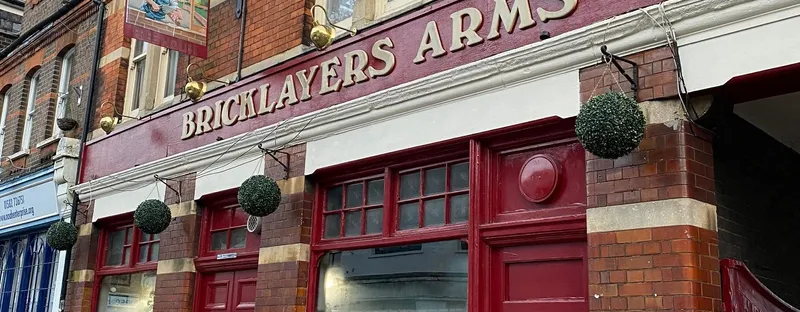
Last but not least we are thrilled to highlight South Beds CAMRA, home to Leighton Buzzard, Luton, Dunstable and Ampthill areas, amongst others. South Beds border meets that of the Mid-Chilterns at our branch’s northerly boundary, marking the beginning of Bedfordshire territories that are home to Leighton Buzzard Brewery and Kelchner Brewery. The South Beds regular publication is the Beer In Bed(s) magazine and the branch’s reigning Pub of the Year is The Bricklayers Arms in Luton.
The Bricklayers Arms in Luton, winner of the most recent Pub of the Year award in South Beds, champion of the branch area.
So there we have a definite list of our wonderful sister branches, including details of their publications, events and Pub of the Year award winners, seek them out and enjoy.
Here’s to our neighbouring branches, and to the Central Southern and East Anglia CAMRA regions!
CHEERS
*Learn more about South Herts CAMRA through their website HERE.
Learn more about Slough, Windsor & Maidenhead CAMRA through their website HERE.
Learn more about Aylesbury Vale & Wycombe CAMRA through their website HERE.
Learn more about Watford & District CAMRA through their website HERE.
Learn more about South Beds CAMRA through their website HERE.
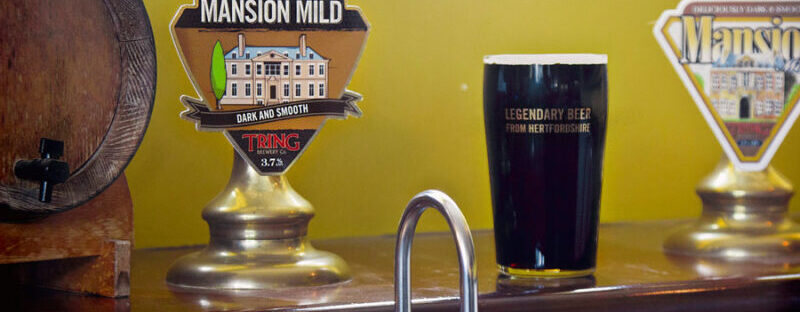
Every May CAMRA branches across the country celebrate ‘Mild May’, an initiative to celebrate and highlight the beer style Mild, which was recently under threat of extinction due to a drop in popularity.
To help revive the Mild beer style, CAMRA branches encourage local pubs to have at least one Mild on the handpumps during the month of May, and some organise trips to pubs and breweries that embrace and support the beer style.
Mild is a beer style which developed in the late 18th and 19th centuries as drinkers started to demand a slightly sweeter and less aggressively hopped beer than Porter. Early milds were much stronger than modern versions, which tend to fall into the 3% to 3.5% category, though a number of brewers are bringing strength back into style.
Mild is usually dark brown in colour, due to the use of well-roasted malts or roasted barley. Look for a rich malty aroma and flavour, with hints of dark fruit, chocolate, coffee and caramel, with a gentle underpinning of hop bitterness.