At time of writing, Mid-Chilterns CAMRA have hosted our first branch committee meeting since March 2020 and we have a lot of exciting developments to let you in on..
Truth be told we never went anywhere, from monthly zoom cohorts to a new website and enhance social media channels, we have been plugging away behind the scenes to keep the lights on, ready for when we could meet in person again.
Our first branch meeting took place on Wednesday August 4th and was hosted by the fabulous Bell at Chartridge. The Bell team made the committee feel most welcome and their cask ales (Bombardier and Tring Brewery) were kept and poured to perfection. It was great to see each other in the flesh, and most importantly, thrash out branch plans going forward..
The Bell at Chartridge – Chartridge Village, Chesham, Buckinghamshire, HP5 2TF
We are pleased to confirm that we now have a calendar for all branch meetings for the next twelve months. We’re looking to visit some newer Mid-Chilterns gems whilst getting out to a number of more rural locations, ensuring they are represented with beer scores on WhatPub (the portal to which we are guided in our decisions regarding Pub of the Year and Good Beer Guide nominations – but more on that later..).
Also in the pipeline is an informal social, a chance to shed the reports and paperwork of committee issues and to let our collective hair down; welcoming all members in a grand day out. Whilst our first social is still in planning, we promise that we have big ideas and will be sure to shout about them as soon as we can.
Also discussed at our first meeting was the idea of easy-to-use beer scoring posters. These posters would be CAMRA branded prints that take members through to WhatPub with just a scan of a QR code. Enabling scores on the go, these posters will ensure that each pub is given fair opportunity to see representation in the Good Beer Guide and Pubof the Year commendations. It is worth noting that scoring through WhatPub is influenced by anyone with a CAMRA membership, therefore it is you that has the power to get your local awards and publishing acclaim. Get voting on WhatPub!
Last but most certainly not least is the long-awaited return of our branch magazine, The Tapler. Edited by the ever-dedicated Andy, the Mid-Chilterns CAMRA Tapler released its first edition since lockdown in late July. Though this edition was an online exclusive (read here), we are thrilled to announce that the next edition will be distributed in-print throughout Autumn.
So there’s a little run down of what the Mid-Chilterns branch has been doing in recent times and our plans for the future. As mentioned, there are things that we can’t tell you about just yet but promise they’ll be worth the wait, so please do keep up to date with the branch via social media and our website. Of course, please feel free to pop along to one of our monthly meetings, you’d be most welcome indeed!
This week we are celebrating one of our branch’s most innovative breweries – Mad Squirrel.
Mad Squirrel was started by owners Greg and Jason in 2010, serving cask beer to many a wonderful rural pub in the Chilterns. Not before long, the brewery had carved out a market of contemporary styles sold through a chain of modern beer bars – a vibrant rebrand beckoned. In 2017 the brewery became the Mad Squirrel that we know and love today, having won many awards whilst opening their six locations (including a brewery tap) along the way.
Artisan pizzas are a staple offering at many of Mad Squirrel’s taprooms – plenty of amazing beer and food pairings to be made!
Today, Mad Squirrel brew a core range of cult classics such as $UMO and Roadkill, though stalwarts such as London Porter and Mister Squirrel Bitter show pride in their traditional cask ale beginnings. The brewery’s core range is joined by an ensemble cast of seasonal and one-off beers that have earned them their innovative reputation, including German Doppelbocks, Belgian Witbiers and luscious lip-smacking sour ales.
$UMO, flanked by Zealous Pilsner, Roadkill IPA and Hopfest Pale Ale.
Mad Squirrel Brewery – constantly evolving, often in unexpected ways!
CHEERS
MID-CHILTERNS CAMRA RECOMMENDS..
A can of the renowned Hoodwink White Stout. Hoodwink is a golden beer that has been crafted with lactose, vanilla and cocoa. Pale in colour but rich and malty in flavour, this mind-bending brew is a testament to Mad Squirrel’s intrigue and dynamism.
FIND THE BEERS..
Mad Squirrel Brewery Taproom (Potten End), Mad Squirrel Taproom Chesham, Mad Squirrel Taproom St. Albans, Mad Squirrel Taproom High Wycombe, Mad Squirrel Taproom Berkhamsted, Mad Squirrel Amersham, The Full House (Hemel Hempstead), Fishery Wharf Cafe (Boxmoor), The Fishery (Boxmoor), Marchmont Arms (Hemel Hempstead), Platform Wines (Berkhamsted), madsquirrelbrew.co.uk
Beer Day Britain is the UK’s national beer day, celebrated annually on June 15th. The brainchild of beer sommelier Jane Peyton, #BeerDayBritain is open to everyone and is not exclusive to any one organisation or style of beer.
The day aims to celebrate the nation’s rich brewing heritage, crescendoing at 7pm with a nationwide ‘Cheers To Beer’, with photos to mark the occasion shared over social media channels under the #CheersToBeer hashtag.
Jane proudly asserts that “We have so much to be proud of.. pubs are a cornerstone of our social life and beer is the drink of the nation!”
However you are celebrating #BeerDayBritain, we hope you have a good one, from all of the committee at Mid-Chilterns CAMRA.
This week we are celebrating one of our branch’s finest breweries – Pope’s Yard.
At the helm since Pope’s Yard launch in 2012 are Geoff and Barbara, a dynamic duo that between them master brewing, marketing, deliveries, events and so much more.
Geoff tapping some barrel-aged beer
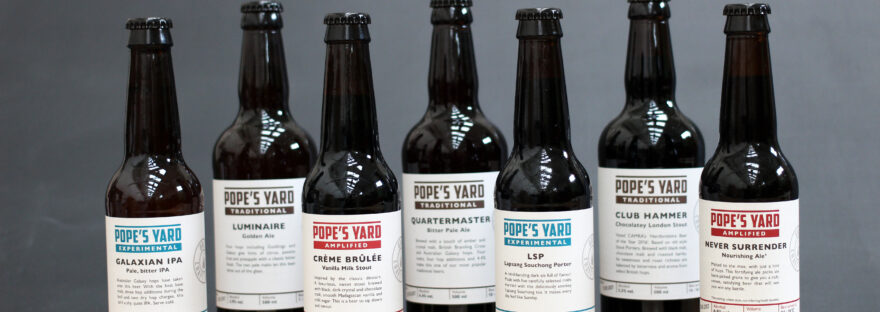
With a much celebrated core range including CAMRAs ‘Hertfordshire Beer of the Year’ (Club Hammer Stout – 2016), Geoff and Barbara also churn out some impressively unique and dynamic beer styles. Brews have included a Lapsang Souchong Porter, Spruce TipBeer and a revived recipe for Ancient EgyptianAle!
Ancient recipes feel almost natural at the Pope’s Yard brewhouse, based in the historic site of Frogmore Paper Mill in Apsley, Hemel Hempstead. Still home to the world’s first mechanised paper machine, Fromore Paper Mill appears on records as far back as 1086!
Frogmore Paper MIll
To experience the heritage of the mill why not visit Pope’s Yard for one of their renowned ‘Pop-up Bar‘ events? Ale flows freely in the courtyard, a picturesque aesthetic completed by the tranquil stream of the River Gade that runs alongside.
Wherever you enjoy their beer, be sure to raise a glass to the skill of Geoff and Barbara, and to the wonderful ales of Pope’s Yard Brewery!
CHEERS
MID-CHILTERNS CAMRA RECOMMENDS..
A bottle or two of the Hibiscus Sour. If you’re more of a traditional drinker; a pint of the ‘Quartermaster’ bitter.
FIND THE BEERS..
Frogmore Paper Mill (pop-up events only), the White Lion pub (Apsley), Monks Inn micropub (Hemel Hempstead town centre), Coffee & Wine (Boxmoor village), Dalling & Co deli (Kings Langley), Cellar Door Wines (St. Albans), Beer Shop (St Albans), Beer Shop (Hitchin), Creative Juices taproom (Rickmansworth), Wishful Drinking (Rickmansworth), St. Albans Beer Festival, popesyard.co.uk
This week sees us turn our focus to the CAMRA ‘LocAle‘ scheme..
LocAle is an initiative that promotes pubs stocking locally brewed real ale in order to reduce the number of ‘beer miles’ from brewery to pub cellar. It is based on growing consumer demand for quality local produce and increasing awareness of environmental issues.
Launched in 2007, CAMRA branches around the country will award accreditation to pubs that regularly stock at least one real ale. The pub can then advertise their support by posting the window sticker in their pubs.
Whilst the radius of LocAle is 30 miles ‘from brewery to pump’, we especially love pubs promoting Mid-Chilterns breweries, breweries such as Tring Brewery and Mad Squirrel.
Some of the benefits of stocking locally produced real ale in local pubs include:
Pubs can attract more visitors through their doors, including tourists
Consumers can enjoy greater beer choice and diversity
Local brewers are supported with increased sales
Local economy is supported as more money is generated and spent locally
Fewer beer miles means less impact on the environment
BREWERS & OUTLETS
Although it is not set in stone, what counts as a LocAle is taken to be approximately 30 miles between brewery and bar. The Mid-Chilterns area stretches over quite a large area and depending on where you are in that area, the following breweries fall within that category:
Aylesbury:Aylesbury Brewhouse Co, Chiltern Brewery. Borehamwood: Better World Brewing Ltd. Brill: Vale. Chiswick: Fuller’s. Hatfield: The 3 Brewers of St Albans. Henley-on-Thames: Chiltern Valley Winery & Brewery, Lovibonds Brewery Ltd, Luxtons. Leighton Buzzard: Leighton Buzzard Brewing Co. Long Crendon. XT Brewing Company. Maidenhead: New Wharf Brewing Co Ltd. Marlow: Rebellion Beer Co Ltd. Pinner: Pinnora Brewing. Potten End: Mad Squirrel. Reading: Ridgeway Brewing. Rickmansworth: Creative Juices Brewing Co. Tring: Tring Brewery. Watford: Pope’s Yard. Wheathampstead: Farr Brew. White Waltham: Stardust Brewery. Windsor: Windsor & Eton Brewery.
There are probably others that we have missed, but you get the idea. If you fall into the category and think that we have missed you out, then please contact the Editor.
Below is a list of pubs in the Mid-Chilterns area that meet the LocAle criteria.
Amersham: King’s Arms, The Crown. Apsley: Paper Mill, White Lion. Asheridge: Blue Ball. Berkhamsted: Bull, Crown, George, Goat, Mad Squirrel Brewery Shop, Rising Sun. Botley: Hen & Chickens. Bourne End: White Horse. Bovingdon: Bell. Boxmoor: The Grapes. Briden’s Camp: Crown & Sceptre. Cheddington, The Old Swan. Chesham: George & Dragon, Mad Squirrel Brewery Shop, Queen’s Head, Trekkers. Chesham Vale: Hungry Olive (Black Horse). Coleshill: Harte & Magpies. Dagnall: Red Lion. Flamstead: Spotted Dog. Flaunden: Brick Layers Arms, Green Dragon. Great Missenden: The Nags Head. Hawridge Common: The Full Moon. Hemel Hempstead: The Full House. Ivinghoe: Rose & Crown. Ivinghoe Aston: Village Swan. Kings Langley: Saracen’s Head. Leverstock Green: Green Man, Leather Bottle. Ley Hill: Crown, Swan. Little Chalfont: White Lion. Long Marston: Queen’s Head. Markyate: Plume of Feathers. Marsworth: Angler’s Retreat, Red Lion. Mentmore: Stag. Penn Street: The Squirrel. Seer Green: Jolly Cricketers. St Leonards: The White Lion. Swan Bottom: Old Swan. The Lee: Cock and Rabbit. Tring: Robin Hood, Anchor, Kings Arms, Castle. Whelpley Hill: White Hart. Wiggington: Greyhound. Wilstone: Half Moon. Winchmore Hill: Plough, Potters Arms
If you see one of our LocAle stickers in a pub window, be sure to pop in for a quality brew!
St Patrick’s Day is the annual celebration of Irish culture and its patron saint Patrick ‘the Apostle of Ireland’. Celebrated globally on-or-around the 17th of March, St Patrick’s Day is synonymous with dry stout, however this is not the only style that the Irish lay claim to.
Modern Irish Red Ales, from left to right: Rascals Brewing Co. (Dublin) – ‘Big Hop Red’, Porterhouse Brew Co. (Dublin) – ‘Red Ale’ and Mourne Mountains Brewery (Warrenpoint, County Down) – ‘Travelling Tales’
Irish Red Ale is a sweet, malty beer, brewed at session strength with a vibrant red hue. A prickly carbonation lifts notes of bread and caramel in this light ale, an ale much loved in Ireland and the United States. With regular, sizable exports there is no bigger brand than Smethwick’s Irish Ale.
Brewing has taken place in Ireland since the Bronze Age, with brewers such as Smethwick’s creating malt-forward styles to compensate for a harsh hop-growing climate.
In 1733, Irish brewers were given an ultimatum following a ban on affordable Flemish hops; shoulder the (high) expense of English imports or use innovative grains to bolster their brews instead. Many pursued the latter.
Roasted Barley became a favourite in Irish brewing as it was cheap to make and easy to store. As the grains were roasted intensely (in place of malting), they showcased the added bonus of astonishing colour and flavour.
The most famous Irish style brewed with roasted barley is dry stout. Brewers such as Arthur Guinness used the grain to impart flavours of coffee and chocolate in their beers, stouts that were jet-black in colour with highlights of sunburst red.
This attractive red hue was to be leveraged in lower-strength ales too, ales that were more accessible than strong, dark beers. Mirroring a growing market for session strength Bitter in England, these red ales became a staple for Irish brewers, with a sweet-malt palate and vibrant aesthetics enjoyed by generations to come.
It’s no coincidence that Smethwick’s are a market leader in Irish Red, with a history of brewing that stretches back in to the 1700s. Smethwick’s were established in 1710 in Kilkenny, an Irish town that many brewers call home, brewers including Sullivan’s Ales.
The affairs of Smethwick’s and Sullivan’s were more deeply rooted than beer and, down the line, the brewery directors became neighbours, sharing concerns of politics and philanthropy across their homestead partitions. The lineages of the two families became one when, as the legend goes, Sullivan’s brewery was lost in a horseracing bet to Smethwick’s in 1918. Sullivan’s and Smethwick’s were so entwined that, at the time of the wager, the families had already married into one another.
With a consolidation as smooth as Irish Red itself, Smethwick’s saw the style as a flagship brew, and sort to unleash it on the world.
Having grown export sales significantly (in chief to the United States), Smethwick’s was bought by Diageo (owners of Guinness, among many others) in 1965. By this time Smethwick’s Red Ale was an established Irish brand, capturing the fascinations of an emerging speciality beer market in the United States.
This speciality market had grown, in part, thanks to a celebration of European styles from beer writers such as Michael Jackson. Jackson is heralded as a savour of native styles and, through his musings, many exporters scrambled to get Irish Red Ale stateside.
Not before long the trajectory of Irish Red was accelerated once more, this time by amateur homebrewing, another emerging sector in the states.
Following half a century of prohibition-era restrictions, homebrewing was legalised in the United States in 1978. Ignoring the mass produced lagers that monopolised bars and restaurants, new hobbyist brewers took inspiration from European specialty styles instead.
The provenance of Irish Red struck a chord with American homebrewers, as many shared in the national heritage of beers such as Smethwick’s. As the story goes, these homebrewers graduated to commercial concerns and the American craft beer scene was born, with a rebirth of Irish Red in taprooms and brewpubs alike.
Today, Irish Red is brewed all over the world and no less in its’ homeland of Ireland. With its’ own new-wave of craft breweries, interpretations of Irish Red are lovingly produced and consumed throughout the Emerald Isles.
The heart of Irish beer is alive and beating, with streams of red pumping through its veins and into glasses the world over.
Slainte to Irish Red Ale, have a great St. Patrick’s Day!
CHEERS
Talking of glasses raised, here is a snapshot of three that I found, and how they measure up..
Rascals Brewing Co. (Dublin) – ‘Big Hop Red’ – Although joint-top in terms of ABV (5.0%), this example was by far the lightest in body, with the lifting notes of citrus hops and prickly carbonation making ‘Big Hop Red’ my favourite in the trio. It should be noted that this example is prides itself on an assertive American hop bill, so is likely the most progressive version of the style.
Mourne Mountains Brewery (Warrenpoint, County Down) – ‘Travelling Tales’ – Loads of caramel flavours come through in this Irish Red, just about taking the lead in the incredibly well balanced hop and malt profiles found in this Irish Red. At 5%, ‘Travelling Tales’ is equally as robust in ABV as Rascal Brewing’s iteration, though the big biscuit and caramel notes would trick you into thinking it was heavier. Incredibly enjoyable!
Porterhouse Brew Co. (Dublin) – ‘Red Ale’ – This Irish Red is noticeably deeper in colour than the rest of the trio, a good clue that the beer in this bottle has a strong malty backbone. This example is the lightest in alcohol content at 4.5%, though in a blind tasting I picked this out as the strongest, its’ full mouthfeel and impressive body similar to that of an English ESB. Although I am yet to try many other Irish Red Ales, this example felt the most traditional in form, so perhaps truest to style? I will have to drink more to find out!!
Today marks the start of British Pie Week, a week dedicated to the undisputed champion of pub-grub.
To mark our celebrations, we’ve paired three distinctly British pies with their luscious beery counterparts. Let’s tuck in!
BEGINNINGS
In history’s rich tapestry, pie first appears in Ancient Egypt, where a succelent honey filling was encrusted in oats, wheat or rye. The Ancient Greeks were next to leave their mark on pie, building on the knowledge of the Egyptians to create pastries with fillings baked into them.
Hot on the heels of the Greeks were the Romans, who marched across Europe with rations of food encased in pastry, protected from the blood, grit and dirt of the outside world. When their legions arrived in Britain, the Romans were swift in their introduction of pie to the newly conquered territories.
Pie continued to rise in favour over hundreds of years and, when the Middle Ages arrived, esteemed chefs put pastry at the centre of royal tabletops. Entertainment and food went hand-in-hand in Medieval times as chef’s became banquet coordinators, mastering the art of dinnertime theatricals.
Combining a more palatable flavour with increased robustness, chefs in the Middle Ages created extravagant pastries that were epic in proportion. Once baked these pies were used to conceal flocks of birds and even the occasional jester, primed to pounce at the surprise and delight of all guests in attendance.
Despite these pastry innovations, the crust continued to be discarded of (given as scraps to servants) as guests focused on the more exotic fruits and meats offered at the table.
Eventually our beloved pastry treat was affirmed in high-society, crust and all, in the fields of Melton Mowbray – the modern-day home of pie.
MELTON MOWBRAY PORK PIES
In 18th century Leicestershire, Melton Mowbray bakers began to embrace the heritage of pie as they prepared pork-filled pastries for local huntsmen. Decent enough for gentry on-the-go, pork pies became a favourite in picnics and packed-lunches across the land. Now entrenched in the British diet, the humble pork pie is heralded as a true national treasure!
Today, the town of Melton Mowbray is not only home to the British Pie Awards (the jewel in the crown of British Pie Week), but is also the central location of the Melton Mowbray Pork Pie Association.
The work of the association’s ten producers came to fruition when, in 2009, their namesake product was awarded Protected Geographic Indication for its distinctive style (bow-shaped from baking without assistance of a supporting hoop and grey in colour through the use of uncured pork).
In accordance with the PGI, a Melton Mowbray Pork Pie must be produced using the methods that were first mastered by local bakers in the 18th century, and has to manufactured within 10.8 square miles of the town.
In celebration of pie’s most elevated form we’ve paired an authentic Melton Mowbray pork pie with a pint of golden ale (brewed with East Kent Golding hops – another British foodstuff with protected status).
Pork pie and golden ale is a fabulous example of a ‘complimentary pairing’, one of the ‘threes Cs’ of beer and food matching. The herbal, fruity notes of Hopback Brewery’s Summer Lighting will bring out the sweetness of the pastry and highlight the delicate spices in the pork.
PIE, MASH & LIQUOR
As the 18th century drew to a close, Britain’s workforces were thrust out of the fields and into the ruthless toil of smog ridden cities.
Among all the blood, sweat and tears of the industrial revolution, pie once again found itself as an everyman’s food. Returning to its’ functional roots the pie became a top pick for hungry workers, sporting a shell that was indiscriminate of sooty air or dirty hands.
With a large working-class population, the East End of London was teeming with pie lovers during the industrial revolution. Those not content with homemade lunches would opt for the pie, mash and liquor (parsley gravy) on offer from one of the many ‘Pie & Mash’ shops in the capital.
‘Pie & Mash’ is a proper London delicacy, showcasing hearty mince-meat that has been set in a suet pastry base. Once filled, the base is topped with either a rough-puff or short-pastry lid. The pie is then plated up with creamy mash and finished with a dousing of parsley liquor. The ultimate in homely nourishment, Pie & Mash is a sum of its’ parts and then some!
The Pie & Mash shops of London’s East End are today regarded a part of our national identity. Shops such as Manze’s in Walthamstow have been granted listed status for their beautiful heritage interiors – temples of pie if you will.
As the second of our ‘three Cs’, a cleansing pairing aims to reset our palette, preparing the mouth for many more swigs and bites. To drinks-match this bona fide British institute, we’ve gone for a pint of ruby ale (‘Three Hundreds Old Ale’ from Chiltern Brewery) to wash away the heaviness of the dish.
A perfect balance of juicy malts and floral hops clear the big foodie flavours, readying you for another onslaught of pie and ale. It’s a humble pairing but that’s what we believe makes it so great and true!
FOOTBALL PIES
As Britain grew to be a powerhouse of global industry, lower-class workers (such as those in the East End) were rewarded with restorative time off, and a modest amount of pocket money to spend along the way.
One popular pastime of the working-class was the thrilling sport of football. Growing into the worldwide industry that it is today, football was nurtured in the pitchside terraces of British clubs, filled to burst with impassioned fans throughout the 1800s. These weekend revellers were not hungry for glory alone, as many sought out food to keep them warm in the open stands.
As a hearty handheld meal, pie warmed the cockles on even the coldest night away in unfamiliar territory. As time went on, pie became the unofficial meal of match-day and the tradition spawned its’ very own subculture..
Representing a widespread acceptance of the category, ‘Football Pies’ are judged in their very own class at the modern day British Pie Awards. It is worth noting that quality of pie is not relative to a club’s stature, as Tom Dickinson found out in his book ’92 Pies’. 92 Pies follows Tom Dickinson, a Bolton supporter, as he ranks the pies from each of the 92 grounds in professional English football (across just one season!!), with Morecambe FC crowned overall champion.
‘The Shrimps’ pies are legendary within the subculture and their Chicken and Mushroom product has won big at the British Pie Awards, claiming both ‘Champion Football Pie’ and ‘Overall Champion’ of the entire competition!
Although Morecamb’s pie is a champion in all senses of the word, most British clubs offer only mass-produced pies at their grounds. In the spirit of accessibility, we’ve gone with the Chicken Balti Pukka Pie, which can be found at The Hawthorn’s stadium, home of Premier League side West Bromwich Albion.
We’ve paired this desi-inspired pie with a brew that is intrinsically linked to India. For those who don’t already know, India Pale Ale (or IPA) takes its’ name from the style of highly hopped pale beer that was exported en-masse to British colonies in India throughout the eighteenth and nineteenth centuries. As hops are antibacterial, huge amounts of the flower were used to preserved the brew during its’ long and turbulent journey at sea, introducing fruity aromas and a bitter aftertaste to the ale.
The match of IPA and curry is perhaps the most tried and tested example of a contrast pairing (the last in our ‘Three Cs’ of pairing), so we have confidence that Balti Pie and Tring Brewery’s Pale Four will knock it out the park!
The dank, piney qualities of the Pale Four should cut through the heat of the curry. Bright, fruity aromas will contrast well with a rich and spicy sauce.
THAT WAS GOOD, HUH?
Now that you are full of pie and beer, we’d like to introduce CONTEXT as a bonus C of beer and food matching.
Contextually speaking, beer and pie just go . It sounds right, looks great and tastes amazing. Under the guise of our last ‘C’, beer and pie can be matched in any combination, so please go ahead and try your own!
We hope that you have enjoyed these pairings and will enjoy future pies even more, in the knowledge that pie is as much a part of the British diet as a pint of cask ale.
Here’s to the pies of Melton Mowbray, the East End and rainy British football grounds – and to all those in between!
Valentine’s Day is a celebration of love popularised by the catholic church, thought to be in Pagan origin. Pagan, Christian or otherwise, millions of Brits flock to the shops each year in search of cards, chocolates and flowers for their loved ones. Although ale is omitted from this trio, there are many ways in which these themes can be manifested into gifts of beer.
Welcome to the Beer Lover’s Guide to Valentine’s day. Let’s start with the sweet stuff, quite literally..
CHOCOLATE
Cocoa is the fruit of the Theobroma Cacao tree. To extract this mass, cocoa beans are fermented and roasted, before their shells are removed to reveal the nibs. These nibs are then ground and liquefied, before cooling to separate the cocoa solids from the fatty butter.
For centuries, these powdered solids have been used to create drinking chocolate, cocoa’s most popular form up until the invention of the chocolate bar, by British chocolatier Joseph Fry. Why not embrace in the heritage of drinking chocolate with one these delicious, chocolatey brews..
CLUB HAMMER – POPE’S YARD BREWERY, HERTFORDSHIRE
Chocolatey London Stout.. Based on old style Stout Porters. Brewed with black malt, chocolate malt and roasted barley. Its sweetness and roast richness are balanced by bitterness and aroma from select British hops.
Looking to buy local? You can’t go wrong with Pope’s Yard, brewing out of the picturesque Frogmore Mill in Apsley, Hemel Hempstead. Whilst Club Hammer does not contain any actual chocolate, it’s delicious notes of cocoa and caramel have earned Pope’s Yard many an award over the years (CAMRA’s ‘Hertfordshire Beer of the Year 2016’).
Cocoa Wonderland – Thornbridge Brewery, Bakewell
Cocoa Wonderland is a full-bodied, robust porter with natural mocha malt flavours from the complex malt grist, complementing the decadent additions of real chocolate to the maturation process.
If the chocolate notes of malt alone aren’t giving you a sugar rush, try Cocoa Wonderland from the revered Thornbridge Brewery, brewed with real chocolate.
Hoodwink White Stout – Mad Squirrel Brewery, Hertfordshire
Hoodwink, this is one trick you will enjoy being played on you.
This one is a wildcard – and another vote for local! Made with lactose, vanilla and white chocolate, this luscious dessert beer hides behind the disguise of a clear golden hue. Touted as a ‘white stout’, Mad Squirrel (Potten End, Hemel Hempstead) have distilled the experience of a full-bodied stout into an beer that boasts a complexion as pale as straw. Truly a wonderful experience!
Back to the story..
Having discovered a way to blend sugar with cocoa butter and powder into a paste, Joseph Fry moulded his first solid bar in 1847 – Fry’s Chocolate Bar. Fry’s invention was a hit and in 1849, fellow Quaker and chocolate entrepreneur John Cadbury released his brand of bar to the world. Ever an industry pioneer, Cadbury showcased the world’s first heart-shaped chocolate box on Valentine’s Day in 1861
Cadbury’s rose-adorned tins met an outstanding reception from prudish Victorians who, having emptied them of chocolates, used the tins to store their ever-so-saucy valentine’s cards. In 1919 Cadbury’s and Fry’s merged, securing a legacy of romantic chocolate merchandising that is celebrated each and every Valentine’s!
CARDS
The blank canvas for all literary Casanovas, valentine’s cards are also believed to be a British institution. Sending cards on Valentine’s Day was first popularised by Charles Duke of Orléans, who wrote to his wife whilst imprisoned in the Tower of London, having been captured in the Battle of Agincourt. Addressed to Bonne of Armagnac, Charles sent his ‘Valentine Poem‘ across the channel in 1415.
God forgives him who has estranged Me from you for the whole year. I am already sick of love, My very gentle Valentine.
Enraptured with their prisoner’s gesture, British romantics wrote poems of their own to loved ones on the Feast of Saint Valentine. Though popular amongst the upper-classes, it was not until four hundred later that the sending of sweet nothings became widespread, with the introduction of Penny Mail..
The Royal Mail takes its name from the service it offered when launched by Henry III in 1516; carrying letters to officials of government and crown. Although this service was made public by Charles I in 1635, it continued to be prohibitively expensive until 1837.
In 1837 Rowland Hill proposed a set of reforms to the expensive Royal Mail system, these new measures, including Penny Mail Postage, received parliamentary approval in 1840. The newly established Penny Post cost just one penny to send and made the delivery of love letters accessible to all, with 70 million stamps purchased in the first year alone.
As the Duke’s sentiments are now echoed the nation over (stashed in heart-shaped chocolate boxes), Rowland Hill’s memory survives beyond his passing in 1879. Hill is buried among Britain’s most influential figures at Westminster Abbey, an apt resting place for a postal angel – cupid if you will.
If you’re looking for a sweet sentiment wrapped conveniently around a bottle or can, keep an eye out for the following:
I Love You Will U Marry Me? – Thornbridge Brewery, Bakewell
Belgian style Blonde ale matured with strawberries. Refreshing and balanced with subtle sweet and fruity flavours.
I Love You With My Stout – Evil Twin Brewing, New York
Why am I doing this? I didn’t honestly know. It was just an instinct about beer as pure form… in a sense, this stout is like a metaphor for freedom – the sum of all the beauty that surrounds me and my perfect contemporary existence.
Jeppe Jarnit-Bjergsø, Brewer and founder of Evil Twin Brewing
A hefty 12% imperial stout brewed by Brooklyn based Evil Twin Brewing. If one is in search of the world’s beauty, enjoy a sip or two of this brew – just as its’ founder did.
Kiss – Harveys Brewery, Lewes, East Sussex
Light in colour, with prominent floral and ginger notes that mellow into a gentle sweet bitterness. The perfect Valentine celebration beer.
Produced by one of the old guards of British brewing, Harvey’s Brewery of Lewes (East Sussex) releases this seasonal ale on draught and in the bottle throughout the month of February.
FLOWERS
The giving of flowers on Valentine’s Day dates back to the 1700s, when Charles II of Sweden introduced Europeans to the Persian custom of gifting botanicals.
As the favourite flower of Venus, the goddess of love, roses have become synonymous with Valentine’s day. This red-petalled plant is purchased by millions from florists, street vendors and petrol stations as a sign of affection on the feast of Saint Valentines.
Since flowers are an international influence on our celebrations, I’ve expanded our guise to include the following worldwide brews:
Lilac – Brekeriet, Sweden
Sour Ale brewed with Lilac Flowers picked fresh in Skåne, Southern Sweden.
What could be more romantic than a bunch of flowers? How about a beer brewed with actual botannicals!
Kriek Boon – Brouwerij Boon
For this speciality, we use old and young lambic beer that has aged in our oak casks. When the lambic is 6 months old, we add 25% black cherries. This provokes the second fermentation. We then clarify, filter and bottle it. The cherries and young lambic create a red beer that is both natural and fresh, with an absolutely unforgettable sweet and sour taste.
Kriek beer is coloured red (the colour of love!) through the process of cherry maceration that takes place in the cask, as this style of Belgian sour ale ages over many months. Top tip: kriek pairs astoundingly well with decadent chocolate desserts, a champion choice on any valentine’s menu!
Carlsberg – Denmark (kidding, but you’ll see why)
Although macro-lager doesn’t hold many romantic connotations, one eccentricity of Carl Jacobsen (Danish brewer and son of Carlsberg founder JC Jacobsen) did.
Every morning Jacobsen’s gardener would deliver a single red rose to him, which he would carry between his teeth for the rest of the day. “(Carl) believed the fragrance of the rose would add to the beauty of his life.”
If this guide has worked, and you find yourself duly-wed, you needn’t worry that beer does stops here.
It is well noted that the world famous Oktoberfest dates back to the marriage of Crown Prince Ludwig to Princess Therese of Saxe-Hildburghausen, in Munich on October 12th 1810. The Royals invited Munich’s masses to join in with festivities and annual celebrations have been held ever since.
If our guide has failed, and you are without a flame, why not fall in love with beer all over again?
It was of the most beautiful colour that the eye of an artist in beer could desire; full in body, yet brisk as a volcano; piquant, yet without a twang; luminous as an autumn sunset; free from streakiness of taste; but, finally, rather heady.
The Trumpet Major by Thomas Hardy (1880)
CHEERS TO VALENTINE’S DAY
*Pope’s Yard ‘Club Hammer’ and ‘Kriek Boon’ were both purchased from the fantastic Beer Shop St Albans. Harvey’s ‘Kiss’ was ordered online and delivered via courier from Noble Green Wines.
As we find ourselves nearing the end of #Tryanuary, we thought we’d publish one or two short &sweet blogs, to showcase lovely pubs in the Mid-Chilterns.
“Sat on the banks of the Grand Union Canal, The Grand Junction Arms is a traditional pub located in the hamlet of Bulbourne on the edge of the market town of Tring.”
Recently redeveloped by the award-winning Oakman Inns, this canal side pub boasts a clean, spacious and modern interior, with tasteful local artwork displayed for sale. Extensive home-made menus serve all tastes with daily specials. Monday night is steak night and Sunday is curry and quiz night, with music sessions hosted on the first Tuesday of each month.
A large family-friendly garden sits beside the canal with a wild flower orchard. A downstairs bar serves the garden in peak times, most notably the amazing bank holiday music festivals.
Local ale flows aplenty at this lovely home-counties pub, a pub that offers amazing food, events and so much more. Here’s raising a glass to a day out the Grand Junction, as soon as is possible!
Burns Night is a celebration of the life and work of Robert Burns, Scotland’s most revered poet. For this year’s festivities, we’re going to guide you through some of our favourite Scottish beer styles and how they came to be. Let’s start at the beginning..
Brewing is thought to have taken place in Scotland for at least 5000 years, drawing a large influence from Pictish and Northern European tribes, who practiced farmhouse brewing techniques with foraged ingredients.
One style of brew believed to have been mastered by the Picts was Heather Ale. As it sounds, this quintessential Scottish style has been brewed for centuries with the flowering tips of purple heather plants. Heather is just one foragable that hunter-gatherers would have used in place of hops, which are a relatively modern adjunct in British brewing. Instead of hops (which were not widely cultivated in the UK until the fifteenth century), many fruits, spices and herbs were infused in British ale – to balance out the sweet, caramel flavours of the malted brew.
Heather Ale was brewed with other adjuncts, such as bog myrtle, which complimented the drink, the main ingredient however was heather. The unique fragrance imparted by the heather proved a hit and historic recipes for the brew have been passed through Scottish families ever since. Today, heather ale is considered to be one of Britain’s most ancient beer styles.
Although hops have now displaced other adjuncts in the brew due to their impressive antibacterial properties (keeping beer fresher for longer), the flame for Heather Ale is kept alight thanks to the dedicated work of a few Scottish brewers.
Williams Brothers Brewery is the chief guardian of the style, producing its’ Fraoch Ale (Leann Fraoch being Gaelic for ‘Heather Ale’) for commercial consumption since 1992. Williams Bros use an old family recipe that has been passed down ten generations or more.
You’ll be pleased to know that, in life’s cyclical fashion, craft breweries are adopting ancient techniques and recipes to bring vibrancy to their portfolios. Fresh, delicious interpretations of Heather Ale are now brewed the world over!
As can be observed, the Scots have never let a lack of hop-growing regions affect a quality brew. Scottish barley crops are celebrated worldwide for their pedigree, it is for this reason that many a Scottish brewer has pivoted to producing malt-forward beers. These robust national styles are rich in body with an amazing depth of flavour – truly luscious!
One example of an amazing, malt-forward Scottish style is the ‘Wee Heavy’. Wee Heavy is named as such because it was traditionally packaged in smaller bottles, more suitable for the enjoyment of a strong beer. As the strongest of a brewer’s batch (partigyle), Wee Heavy can range anywhere from 7% to 11% or more!
To ‘partigyle’ is the practice of brewing one large stock of wort (brewing terminology for unfermented beer), to be split down in to three or four seperate ales, the strongest receiving the most fermentable portion of wort, the weakest receiving the least.
As the first runnings of the mash (the process in which malted barley is mixed with hot brewing water), the first brew in a partigyle would contain the most fermentable sugars and would therefore finish at a strength in the ‘Wee Heavy’ range. Wee Heavy was a premium product enjoying a long boil in the kettle, caramelising the beer to give it a sweet, slick mouthfeel.
As beer is taxed on ABV, the Wee Heavy regularly featured as the most expensive beer on the bar. In a world of ’60’, ’70’ or ’80 shilling’ beers (denoting the duty invoiced to the brewer per cask), Wee Heavy would often sit in the higher 90 shilling bracket, making it the most costly for the brewer to produce.
As one of the final runnings in a partigyle brew, the 40, 50 or 60 shilling ales would have been the weakest (and cheapest) on the bar, meaning it was affordable and sessionable for any drinker. Due to the incredible consumption of these ales, the shilling system of naming beers has now outlived the denomination of currency itself!
With Shilling Ale, Heather Ale and Wee Heavy still produced and consumed to this day, it is easy to see a Scottish influence on the wider beer world.
Despite their celebration of low-hopped beer styles, Scottish brewers became a key exporter of IPA to the British Empire. These brewers capitalised on the mineral rich waters of Edinburgh, much the same as English brewers had done in Burton-on-Trent. These waters, flush with sulphates, yielded a crisp palate in pale styles, enhancing hoppy brews such as IPA. With huge demand and gargantuan exports of India Pale Ale, the Scots had proved once again that they could master any brew they set their minds to.
Here’s to Scottish beer in all its’ embodiments, a drink legendary enough to join haggis and whisky at the perfect Burns Night table-top!
BEERS PICTURED:‘Heather Honey’ and Wee Heavy Ale from Brewdog (Ellon, Aberdeenshire), ‘Froah’ Heather Ale from William Bros. Brewing (Alloa, Clackmannanshire)